


A trusted knitwear manufacturer
A trusted knitwear manufacturer empowering your brand expansion.
Start your brandjourney today.
Thu 10 , 2026

OEM and ODM are two common clothing manufacturing models used by fashion brands, retailers, and wholesalers. The main difference is who provides the product design and how much customization the manufacturer offers.
Understanding these models helps businesses choose the right production partner, manage development costs, and determine how their clothing products will be developed.
OEM stands for Original Equipment Manufacturer. In clothing production, the buyer typically provides the design concept, technical specifications, patterns, or reference samples, and the manufacturer produces garments according to the agreed requirements.
OEM services may include fabric sourcing, pattern making, sample development, cutting, sewing, finishing, and packaging.
For example, a fashion brand may provide a technical package for a women's dress specifying fabric composition, measurements, stitching details, colors, and label placement. The manufacturer then produces the garment to match the approved specifications.
OEM is suitable for brands that want greater control over product design, construction, and brand identity.
ODM stands for Original Design Manufacturer. In this model, the manufacturer provides existing designs or develops product designs that buyers can select and customize.
Depending on the supplier, customization may include fabric, color, sizing, trims, labels, and packaging. The level of design flexibility varies by manufacturer and agreement.
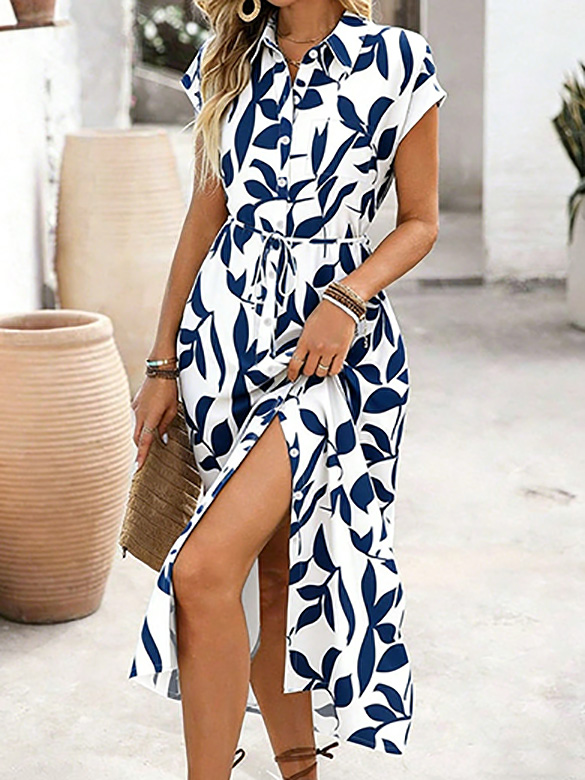
For example, a retailer may select an existing dress design from a manufacturer's collection and request different colors, fabric options, and private labels.
ODM can help businesses launch products more quickly because some design and development work has already been completed.
| Feature | OEM Clothing | ODM Clothing |
|---|---|---|
| Product design | Primarily buyer-provided | Primarily manufacturer-developed |
| Customization | Usually extensive | Depends on the available design |
| Development time | May be longer | Often shorter |
| Design control | Greater buyer control | Shared or more manufacturer-led |
| Development cost | May require more upfront work | May reduce initial development work |
| Best suited for | Unique collections and established brands | Faster launches and simpler product development |
Actual costs, lead times, and intellectual property arrangements depend on the project and contract.
OEM is generally suitable when a brand has original designs, detailed technical requirements, or specific garment construction needs. It offers more control over the finished product but may require additional sampling and development.
ODM may be more appropriate for businesses that want to select from existing designs and bring products to market with fewer development steps.
For example, a fashion label developing a distinctive collection of women's skirts may prefer OEM manufacturing. A retailer testing demand for a new dress category may choose ODM products with customized colors and branding.
Regardless of the manufacturing model, buyers should clarify minimum order quantities, sample costs, production lead times, material specifications, quality inspection procedures, and packaging requirements.
It is also important to establish who owns the designs, patterns, and other intellectual property, particularly for customized OEM projects or modified ODM products.
Providing clear requirements helps reduce misunderstandings and supports a more predictable production process.
The main difference between OEM and ODM clothing manufacturing is the source of product design. OEM generally follows buyer-provided designs, while ODM uses manufacturer-developed designs that may be customized.
Choosing the right model depends on your design resources, customization needs, budget, and launch schedule. Evaluating these factors before selecting a clothing manufacturer helps build a more effective apparel supply chain.
We attach great importance to the customers' demands for product quality and rapid production.
We always believe that meeting the customers' needs is the realization of our value!

Tel:+61 414 284 868
E-mail: sharon.apparelco@gmail.com
Address:Room 101, No. 49, Chonghuan East Road, Shijie Town, Dongguan City, Guangdong Province
Copyright © 2026 Dongguan Sharon Garment Co., Ltd. All rights reserved.
Privacy Policy / Cookie Policy / Terms & Conditions