


A trusted knitwear manufacturer
A trusted knitwear manufacturer empowering your brand expansion.
Start your brandjourney today.
Wed 09 , 2026

Custom clothing manufacturing cost is the total amount a brand spends to turn a design concept into finished, packaged garments ready for retail. It includes fabric, labor, sample development, trims, dyeing, printing, quality control, packaging, and shipping — not just the per-unit sewing price. When brands ask about custom apparel manufacturing cost, they are usually trying to compare suppliers on an apples-to-apples basis, but most factories only quote a flat per-piece price without explaining what drives it up or down. Understanding the full custom garment production cost breakdown helps you avoid surprise charges after production starts and gives you leverage to negotiate better terms.
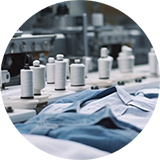
At Sharon Garment, our standardized customization process breaks production into eight stages — from specific requirements discussion through after-sales service — and each stage carries its own cost implications. The key to controlling custom clothing cost is knowing which stages you can optimize and which ones are fixed.
Every clothing manufacturer cost estimate is built from five core components. The table below shows what each one includes and how much it typically contributes to the total:
| Cost Component | What It Covers | Typical Share of Total |
|---|---|---|
| Fabric & Materials | Main fabric, lining, interfacing, thread, elastic, zippers, buttons, labels | 40–60% |
| Labor & Production | Cutting, sewing, pressing, finishing, quality control inspection | 20–30% |
| Sample Development | Pattern making, prototyping, sample rounds, sample fabric | 5–10% |
| Secondary Processing | Dyeing, printing, embroidery, heat transfer, washing, special finishes | 8–15% |
| Logistics & Packaging | Hang tags, poly bags, cartons, shipping to port, export handling | 5–10% |
These ranges shift depending on garment type, order size, and fabric quality. A simple cotton T-shirt will see fabric take up a larger share, while a complex embroidered dress will push labor and secondary processing higher. The important thing is to ask your supplier for an itemized breakdown rather than a single number — any manufacturer that refuses to break down costs is likely hiding margin in one of these buckets.
Fabric is the single largest cost driver in custom clothing manufacturing. The gap between a budget polyester knit and a premium organic cotton French terry can swing your per-unit cost by 40% or more. Here is how common knitwear fabrics compare on cost:
| Fabric Type | Relative Cost | Best For |
|---|---|---|
| 100% Cotton Single Jersey | Low | T-shirts, tank tops, basic tops |
| Cotton-Poly Blend (65/35) | Low–Medium | Everyday hoodies, sweatshirts, casual wear |
| 100% Polyester French Terry | Medium | Premium hoodies, joggers, lightweight outerwear |
| Organic Cotton Fleece | High | Sustainable brands, premium streetwear |
| Custom-Developed Knit | Highest | Exclusive collections, brand-proprietary fabrics |
Beyond the fabric itself, the weight (GSM), dye method (piece-dyed vs yarn-dyed), and finish treatment (brushed, peached, waterproof coating) all add incremental cost. For a deeper dive into fabric selection for specific garment types, see our guide to choosing hoodie fabrics and our French Terry vs Fleece comparison.
Sharon Garment maintains a fabric store with hundreds of in-stock knit options, which eliminates the minimum order surcharge that custom-milled fabrics carry. Choosing from existing stock fabric is one of the fastest ways to reduce your custom garment manufacturing expenses without sacrificing quality.
Sample development is a separate line item that many brands underestimate. Before mass production begins, you need at least one proto sample, one fit sample, and one pre-production (PP) sample. Each round involves pattern-making labor, sample-room sewing time (slower than bulk line), and small-quantity fabric sourcing at retail rather than wholesale rates.
Typical sample costs for knitwear range from USD 50 to 200 per garment depending on complexity, and most factories charge this as a separate fee rather than folding it into the bulk unit price. Some manufacturers waive or credit the sample cost against your bulk order if the order quantity exceeds a certain threshold — this is a common negotiation point worth raising before signing the production contract.
The number of sample rounds directly impacts cost. Clear design specifications from the start — tech pack, reference garments, exact fabric and color codes — can keep sample rounds to two or fewer. Vague briefs that require three or four revision rounds will push sample costs past 10% of your total budget.
This is where how much does custom clothing cost per unit gets its biggest swing. Fabric mills, dye houses, and printing workshops all have minimum order quantities and price breaks. When you order 100 pieces, you pay near-retail fabric rates and setup costs are amortized across fewer units. When you order 1,000 pieces, fabric comes at bulk pricing, machine setup time is spread across more pieces, and the per-unit labor efficiency improves as the sewing line hits its rhythm.
A realistic comparison for a mid-weight cotton hoodie:
| Order Quantity | Est. Cost Per Unit (USD) | Key Cost Driver |
|---|---|---|
| 50 pcs | $12–18 | Small-batch fabric surcharge + setup amortization |
| 200 pcs | $8–12 | Fabric hits first price break, line efficiency improves |
| 500 pcs | $6–9 | Bulk fabric pricing, optimized cutting marker |
| 1,000+ pcs | $5–7 | Full production-line efficiency, best fabric rates |
This is why working with a low MOQ manufacturer matters for emerging brands — you can start at a lower quantity without the extreme small-batch penalty, then scale up as demand grows. Sharon Garment's production capacity of 200,000+ pieces per month means even mid-size orders run efficiently alongside larger runs.
private label clothing cost and full custom design cost differ significantly because they involve different amounts of development work:
| Cost Factor | Private Label | Full Custom Design |
|---|---|---|
| Pattern Development | Uses existing blocks — minimal cost | New pattern from scratch — significant cost |
| Sample Rounds | Usually 1–2 (relabel + minor tweaks) | Usually 3–4 (fit, construction, details) |
| Fabric | Factory stock options available | Often custom-sourced or custom-milled |
| Secondary Processing | Standard branding (woven label, hang tag) | Custom prints, embroidery, special hardware |
| Per-Unit Cost | Lower — shared development across stock styles | Higher — all development cost on one style |
Private label clothing manufacturing cost is typically 20–35% lower than equivalent full custom design because the factory already has the base pattern, fabric relationships, and production workflow established. For brands testing a new market or launching a capsule collection, starting with private label production and transitioning to custom design as volume grows is a proven cost strategy. To understand the broader OEM vs ODM vs private label decision, see our OEM vs ODM comparison guide.
Different knitwear categories carry very different cost structures. Here is a realistic comparison of typical per-unit manufacturing costs for common women's knitwear styles at a mid-volume order (300 pieces):
| Garment Type | Est. Cost Per Unit (USD) | Main Cost Driver |
|---|---|---|
| Basic T-Shirt (single jersey) | $3–6 | Fabric weight + simple construction |
| Polo Shirt (pique knit) | $5–9 | Collar construction + placket |
| Hoodie (fleece back) | $7–13 | Heavier fabric + hood + drawstring + kangaroo pocket |
| Knit Dress (bodycon) | $6–11 | Fit precision + potential ruching/shaping |
| Two-Piece Co-ord Set | $10–18 | Two garments + matching fabric/color consistency |
| Knit Cardigan (button front) | $8–14 | Button placket + heavier weight + ribbed trims |
These ranges assume mid-grade fabric and standard construction. Upgrading to organic or recycled fibers, adding embroidery, or requiring complex prints will push costs toward the upper end. Browse our hoodies and sweatshirts, women's tops, dresses, and co-ord sets to see the style range Sharon Garment produces.
Even with the same garment and fabric, certain choices will inflate your custom clothing manufacturing cost beyond the baseline. Watch for these common cost drivers:
Being aware of these factors during the design phase — not after quoting — lets you make smart trade-offs. For example, limiting a collection launch to two colorways instead of four can save 10–15% on total production cost without compromising the product range.
Cost reduction in clothing manufacturing is not about squeezing the factory — it is about making design and sourcing decisions that remove unnecessary expense. Here are proven strategies that work:
1. Choose factory stock fabrics over custom-milled. Custom fabric development requires 500–1,000 kg minimums at the mill. Using existing stock from the factory's fabric library eliminates this surcharge entirely and shortens lead time by 2–4 weeks.
2. Consolidate colorways. Instead of running 5 styles × 4 colors, run 5 styles × 2 colors. The dye, cutting, and setup savings are immediate.
3. Standardize trims across styles. Using the same zipper length, button size, and woven label across multiple garments lets the factory buy trims in bulk and reduces setup changeovers on the sewing line.
4. Plan for production-line efficiency. Avoid last-minute spec changes once bulk production has started. Every change after PP sample approval triggers re-cutting, re-sourcing, or re-sewing — all charged back to the buyer.
5. Ship in bulk, not split shipments. Consolidating your order into one shipment rather than multiple partial shipments saves significantly on export handling and freight.
For more on how production planning affects your bottom line, read our guide on custom clothing manufacturing lead time — timelines and costs are tightly linked.
Before you commit to a production partner, asking the right cost questions separates transparent manufacturers from those who hide margin in vague line items. Use this checklist during your initial inquiries:
| Question to Ask | Why It Matters |
|---|---|
| Is the quoted price per piece or per dozen? | Some factories quote per dozen (12 pieces), which looks cheaper at first glance. |
| Are fabric and trims included or separate? | A low labor-only quote can balloon when fabric is added separately at retail rates. |
| How many sample rounds are included? | Extra sample rounds at $50–200 each add up quickly if not pre-negotiated. |
| What is the sample cost credit policy? | Many factories credit sample fees against bulk orders — ask for this in writing. |
| Are dyeing and printing included? | Secondary processing is often outsourced and billed separately, sometimes at marked-up rates. |
| What is the MOQ for custom fabric? | If you need custom-milled fabric, the mill MOQ (often 500+ kg) becomes your hidden cost floor. |
| How are rejected pieces handled? | AQL rejection rates and replacement policies affect your true cost per wearable piece. |
| What packaging is standard vs extra? | Poly bags and hang tags may be included, but custom boxes, tissue, or hangers add cost. |
A reliable manufacturer will answer these questions directly and in writing. Sharon Garment provides detailed cost breakdowns for every quote — send your tech pack and target quantity for a transparent, itemized estimate within 24 hours.
Custom clothing manufacturing cost is not a single number — it is the sum of fabric, labor, sample development, secondary processing, and logistics decisions made at every stage of production. The brands that control costs best are not the ones who squeeze the hardest on unit price; they are the ones who understand the full custom garment production cost breakdown and make smart design, sourcing, and quantity choices early. Whether you are launching a private label capsule or developing a full custom collection, Sharon Garment's eight-step customization process gives you transparency at every cost stage. Share your design brief and target budget — we will build a cost structure that fits your brand's stage and scale.
We attach great importance to the customers' demands for product quality and rapid production.
We always believe that meeting the customers' needs is the realization of our value!

Tel:+61 414 284 868
E-mail: sharon.apparelco@gmail.com
Address:Room 101, No. 49, Chonghuan East Road, Shijie Town, Dongguan City, Guangdong Province
Copyright © 2026 Dongguan Sharon Garment Co., Ltd. All rights reserved.
Privacy Policy / Cookie Policy / Terms & Conditions